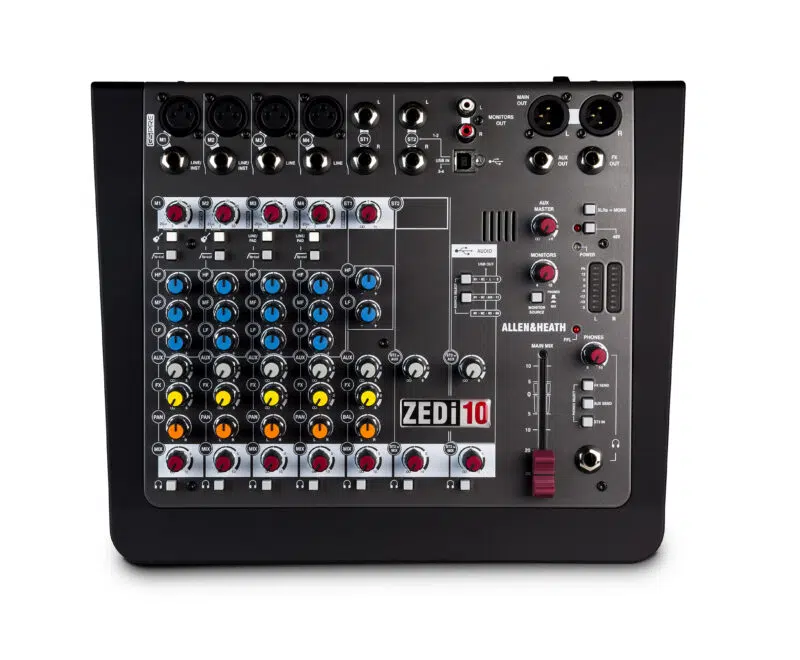
Working with the Allen & Heath ZEDi-10
Choose the mixer around the sources and the way the session will be operated. A small mixer should make the signal path easier to follow, with essential adjustments close to the performer or operator.
Connect the sources for the session
Start with the microphone list, then add instruments and stereo playback sources. Count the connections that must be available at the same time, including any source that is only used for one part of the programme. Keep labels visible and arrange the cables so an operator can identify a channel quickly without disturbing neighbouring plugs during the performance or recording session.
Plan the recording workflow for your system
The four-channel USB connection gives this version a different recording role from the two-channel ZED models. Plan the recording routes around what must remain separately editable in the session, then check the selected sources in the recording software. Make a short recording before the performers arrive and listen back through the intended monitoring path. Keep a note of the routing for the next session.
Set up a mix the operator can repeat
Establish the basic balance with conservative source levels before using equalisation to make further adjustments. Listen through the actual loudspeakers or headphones that will be used, not only the recording software. Since this version has no internal effects, agree whether a dry mix is appropriate or additional equipment is needed. Leave the operator a simple channel list and a clear starting position for the main output.