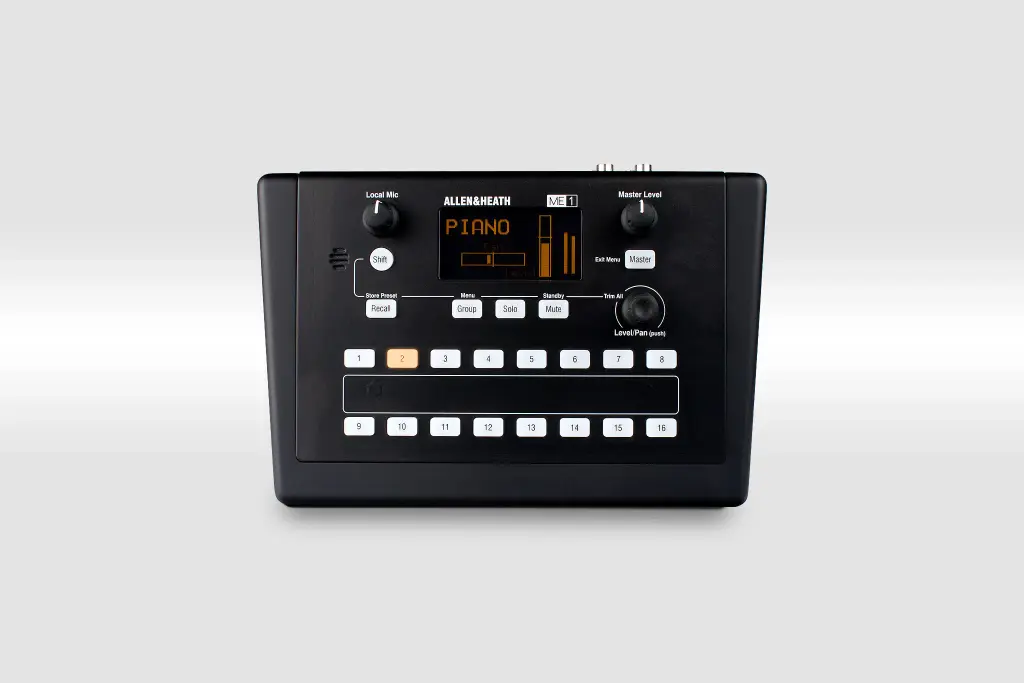
Working with the Allen & Heath ME-1
Give each performer a monitor layout that reflects what they need to hear. Assigning sources and groups is part of preparing the show, so the personal mixer becomes an understandable instrument rather than another unfamiliar control surface.
Prepare the sources for the performer
Agree which instruments, voices and reference signals should be available at the listening position. On this model, the engineer can organise assignments and groups around the performer rather than simply copying the console input order. Label the layout clearly and review it with the user before the first soundcheck.
Plan the audio and power distribution
Choose the distribution method around the number and location of the listening positions. Confirm the compatible host connection and whether power comes from local supplies or the distribution equipment. Where units are daisy-chained, check the power requirements for each position instead of assuming that every downstream unit receives power through the audio link.
Hand over a repeatable setup for the performer
During rehearsal, establish a useful starting balance and explain how to store or recall it. Check the connected headphones or monitoring equipment as part of the complete signal path. Keep overall listening levels under control and make sure the performer knows how to return to the agreed starting point if the mix becomes difficult to manage.