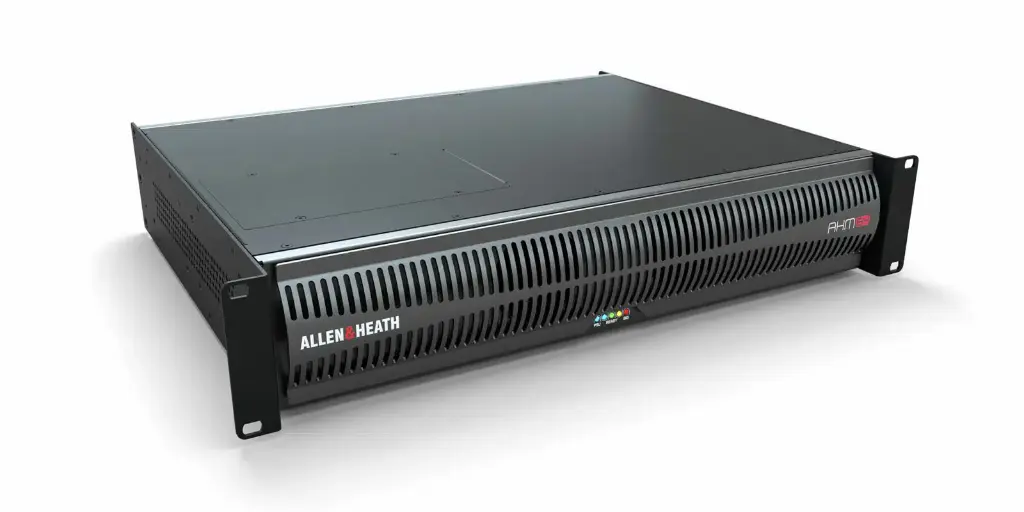
Working with the Allen & Heath AHM-64
An installed audio system has to work for the people using the building, not only for the engineer commissioning it. Plan the AHM-64 around sources, listening areas and everyday control requirements.
Define the needs of each space
For a distributed installation, develop the signal-flow plan before choosing the remote connection points. Group spaces by their operational needs and identify shared sources, paging paths and local overrides. The matrix belongs within that wider design, with processing resources, physical I/O and control responsibilities checked as separate requirements.
Plan the audio expansion
The built-in SLink connection leaves the option-card slot available for another supported audio interface. Use that separation when considering remote analogue I/O alongside networked sources. Verify the required card, firmware and expander topology as a complete combination rather than assuming that every connection option can be used in the same way.
Keep control clear for everyday use
Separate the technical configuration from the controls that staff need to use each day. Identify who may select sources, adjust levels or recall operating presets, and keep those choices consistent across the installation. Include a documented handover and an agreed default state so the system can return to a known operating condition after an event. For a new project, bring the room schedule and control brief to XLR.